FOAMED

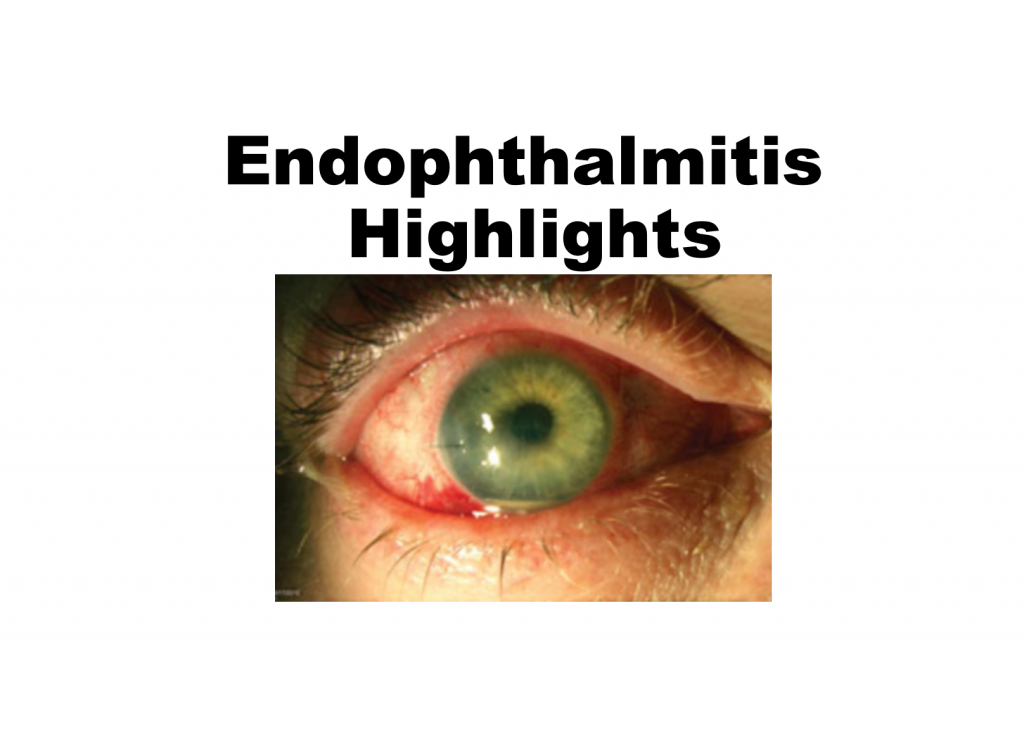
Endophthalmitis Highlights

Endophthalmitis is a rare, but clinically significant infection. It is often misdiagnosed due to the multitude of other ocular diseases that share similar presenting symptoms. It results from an infectious or non-infectious inflammatory process of the vitreous and aqueous humors. Missed or late diagnoses can have severe consequences, including permanent vision loss. The natural history of the disease thus necessitates a high degree of clinical suspicion in all patients, especially those at increased risk.

Endophthalmitis Highlights Read More »

Resuscitation in Sepsis: How Much is Too Much?

In 2002, a new standard of care was established when the Surviving Sepsis Campaign (SSC) highlighted the importance of recognizing sepsis and initiating treatment early. Once we find that a patient meets Systemic Inflammatory Response Syndrome (SIRS) criteria with a source of infection, rapid and appropriate treatment including resuscitation is a must. Early fluid resuscitation is necessary for septic patients, but there is large variance on the aggressiveness of fluid resuscitation. There is disagreement amongst the experts on the total amount of fluids that should be administered and the end points for resuscitation. We must ask ourselves, at what point does our aggressive resuscitation actually start to harm our patients?

Resuscitation in Sepsis: How Much is Too Much? Read More »

Fluid Choice in Sepsis: Does it matter?

Does your choice of fluids for resuscitation in sepsis matter? Multiple studies have been performed to determine whether septic patients benefit from colloid versus crystalloid IV fluids, and other studies have specifically looked at the different kinds of fluids within those specific groups. Debate now exists as to which fluid will improve patient outcomes.

Fluid Choice in Sepsis: Does it matter? Read More »

Reversal of Anticoagulation in a True Emergency – An Update

Please see prior post here: http://www.emdocs.net/reversal-of-anticoagulation/

On October 16, 2015 the FDA granted accelerated approval of idarucizumab (Praxbind), a novel reversal agent of the direct thrombin inhibitor Dabigatran (Pradaxa), for utilization in life-threatening bleeding emergencies.1

Reversal of Anticoagulation in a True Emergency – An Update Read More »

Pearls and Pitfalls of Salicylate Toxicity in the Emergency Department

Emergency physicians commonly care for poisoned patients. These exposures may be either intentional or unintentional. Salicylates are commonly found in many topical and over the counter preparations, yet salicylate toxicity is often overlooked and underestimated as a potential cause for illness in our patients. Below is a condensed quick-guide of common mistakes that emergency physicians may be making with respect to salicylate overdoses and how to fix them. The goals of care to take away from this article are prevention of intestinal absorption and CNS entry of salicylates, as well as drug elimination.

Pearls and Pitfalls of Salicylate Toxicity in the Emergency Department Read More »

Teaching the Modern EM Resident

Current EM residents, as part of the Millennial Generation (born between 1981 and the present), now see this new technology as a way of life, and feel the need to be connected online at all times.5,6 As a result, many EM residents have abandoned the traditional lecture hall and textbooks, and have taken to their electronic devices and the World Wide Web for obtaining information.

In order to continue providing quality education that meets the needs of the modern EM resident, the type and quality of educational resources that we deliver must also change.

So the question becomes: How do we use these new resources to guide the education of our current EM residents both on and off shift?

Teaching the Modern EM Resident Read More »

©2026 blinds advisor and more…. shoulder pain tonyschusterspringlake. Organisation for environment archives – english.