
Pediatric Sepsis Update
Sepsis is the most common cause of death in children worldwide. What is the optimal evaluation and management of pediatric sepsis?
Pediatric Sepsis Update Read More »

Sepsis is the most common cause of death in children worldwide. What is the optimal evaluation and management of pediatric sepsis?
Pediatric Sepsis Update Read More »
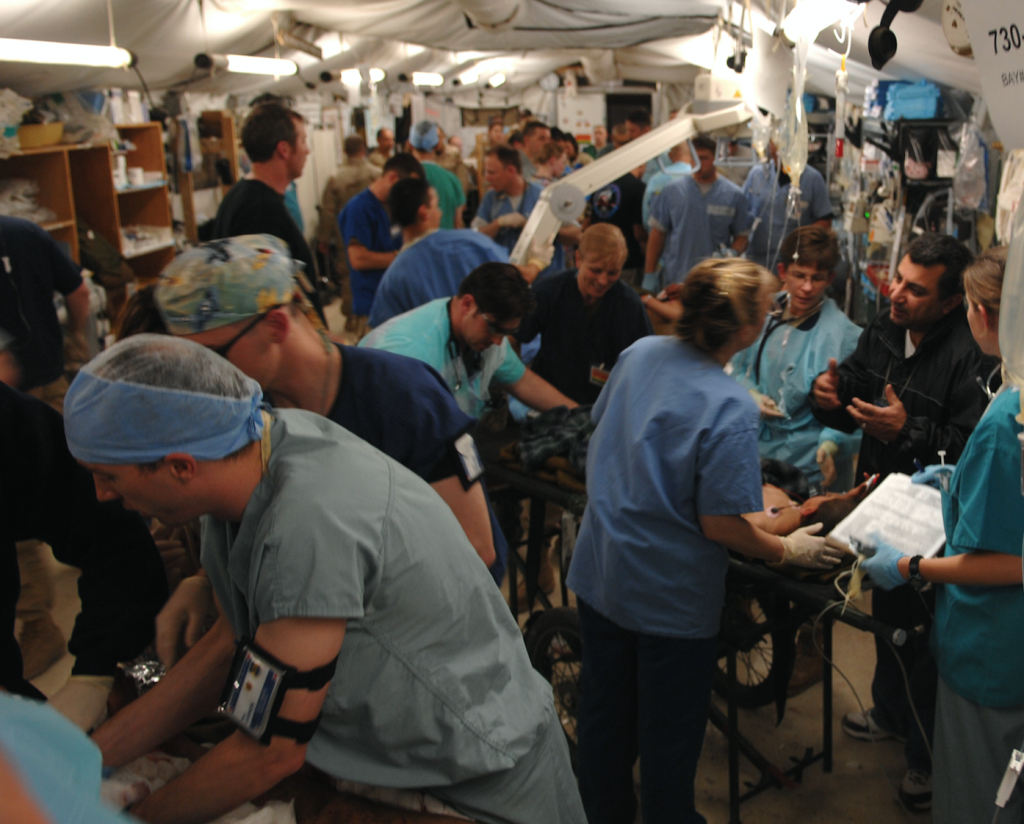
Included below is a summary of numerous blog posts and podcasts that discuss the sometimes controversial issue of permissive hypotension or minimum volume resuscitation in the bleeding trauma patient.
Disclaimer: These are highlights as interpreted by the author of this article and should not replace listening to the original podcast or reviewing the background research. Posts are in chronological order and many of the below podcasts go beyond the scope of permissive hypotension. […]
A #FOAMed Roadmap to Permissive Hypotension Read More »

Does End Tidal CO2 correlate with PaCO2 in Traumatic Brain Injury?
Your neurosurgeons and trauma team have accepted a transfer to your hospital for intensive management of a trauma patient who presented to a small community hospital with a traumatic subarachnoid hemorrhage and epidural hematoma after being involved in a motorcycle accident.
Upon arrival with the critical care transport team, the patient is already intubated and stable on a a ventilator with appropriate sedation and stable hemodynamics. However, the neurosurgeons are in the operating room managing a spontaneous intraparenchymal hemorrhage and there are no available ICU beds due to multiple gun shot victims from a gang fight that you finished admitting.
While the patient is in the ED, the neurosurgeons recommend maintaining eucapnea for the patient since while there are no acute signs of herniation.(1)
Can you use the end tidal CO2(etCO2) or do you need to rely on arterial blood gas (ABG) measurements to maintain PaCO2 between 35-40 mm Hg? […]
End Tidal CO2 in TBI Read More »

Concussion is a type of mild traumatic brain injury (TBI) that classically occurs in sports-related incidents but can be due to any traumatic force to the brain. The term concussion stems from the Latin word, concussus, which means “to shake violently.” While sport is the most common cause of concussion in children, the most common causes of concussion in adults are falls and motor vehicle accidents. Young children have the highest rate of concussions in all age groups. […]

Rapid evaluation and management of the sick neonate is a required skill for the emergency physician. Here we present a brief but comprehensive strategy for resuscitating and stabilizing the critically ill neonate as well as some mnemonics for help remembering the differential diagnosis.

Case Scenario:
A 38-year-old male with a history of hypertension and an unknown heart defect status post repair in infancy presents to the Emergency Department with acute onset chest pain, dyspnea, and diaphoresis. He had a similar episode at another hospital 1 month prior that resolved after “some medication.” He denies drug use.
An EKG is obtained in triage, and is shown below.
The patient’s blood pressure is 120/70. He is alert and oriented, and speaking in full sentences although dyspneic with respiratory rate in lower 20s and O2 saturation 98% on RA.
Clinical Question: Which pharmacologic agent is most effective for termination of monomorphic ventricular tachycardia?
Amiodarone vs Procainamide for Stable VT Read More »

A review of the presentation, diagnosis, and management of this rare but deadly condition in the ED by Justin Arndt, MD.
Thyroid Storm Management Read More »
“Programs like TExT-MED represent a powerful opportunity to expand the domain of emergency medicine”
Can texting reminders to ED patients with diabetes improve their A1C? Scott Kobner discusses the recent TExT-MED trial from June 2014 Annals of EM.
mHealth: Can text message based education lower Hb A1C? Read More »

“There are few hard truths in our field, even in this age of evidence-based practice”
Widely-held and taught ideas whose time has passed: Here are eight (!) EM myths from Ryan Dietert, MD.
Be Skeptical… EM Myths and Their Evidence Read More »

“The patient was hypertensive with SBP in 220s…a stat CT scan revealed a large intraparenchymal hemorrhage”
What’s the goal BP in a patient with ICH? How quickly should that target be reached? What’s the evidence? Ben Cooper, MD addresses these questions and more in this review of the recent literature.
Aggressive BP Management in Patients with ICH Read More »