Ask Me Anything with Rob Rogers, MD, FACEP
Ask Me Anything with Rob Rogers, MD, FACEP Read More »

Questions Addressed:
Lyceum Bullets: DKA Read More »
Thus far we have discussed resuscitation in trauma and sepsis. What distinguishes those two from the resuscitation goals in DKA is timing. In trauma and sepsis, it’s all about early recognition, aggressive and quick optimization, and understanding all the possible treatment options at your disposal. In the management of DKA, it’s quite the opposite. If you remember anything from this discussion, it’s that slow and steady wins the race! In fact, overaggressive resuscitation is what leads to the most significant morbidity and mortality in DKA patients. Patients in DKA don’t die from the disease process – they die because we kill them! […]
Nuances in Resuscitation Part III: Diabetic Ketoacidosis Read More »
In November 2001, Dr. Manny Rivers and his colleagues published an article in the New England Journal of Medicine on Early Goal Directed Therapy in Sepsis. At the time, sepsis was not a new concept, nor was the treatment of it. Where I believe the real genius in EGDT lies is in a fanatical focus on early recognition of sepsis by utilizing SIRS criteria, as well as developing an algorithm with definable objective treatment goals to assist providers in understanding if their treatment selections are in fact working. The basic questions in EGDT therapy are:
Since Rivers published his article in 2001, it has been met with both acclaim and controversy. EGDT utilizes central venous pressure monitoring, lactate trending, SvO2 monitoring, vasopressor therapy, and sometimes, blood transfusions to optimize resuscitation of the septic patient. I believe the controversy is not in whether or not it works, as multiple studies have demonstrated a reduction in morbidity and mortality. Instead, the controversy lies in what is the best modality to answer the basic questions of sepsis resuscitation, and whether some of the aggressive steps recommended in the initial study are necessary or even practical in many emergency departments across the country. […]
Nuances in Resuscitation Part II: EGDT In Sepsis Read More »
One of my colleagues likes to tell our residents, “they don’t come to the ED to die, they come here to live.” It is our skill in identifying critically ill patients and successfully resuscitating them that defines us as emergency medicine physicians. Resuscitation in its simplest term means to revive from unconsciousness or apparent death. However, there are a multitude of different disease processes that cause critical illness, and the approach to resuscitation of each illness is quite different. It is important to have a confident grasp of different resuscitation options and endpoints so you can best help your patients. If you try to resuscitate all of your patients in exactly the same manner, you will actually end up harming many of them instead.
The goal here is to understand the resuscitation technique and endpoints in trauma, sepsis, and diabetic ketoacidosis. The tried and true methods will be summarized, and areas where controversies exist will be discussed as well. As a result, there is a wealth of information that we need to get through. In order to lay it out for you in smaller, digestible bites, I am going to roll this out in installments. First up….trauma! […]
Practical Nuances of Resuscitation – Part I: Not All Are Created Equal Read More »

Continuous quantitative waveform capnography, also known as end-tidal carbon dioxide, PetCO2, or ETCO2, is a measurement of the partial pressure of CO2 in the exhaled breath. This technology has been around since the mid-19th century and only relatively recently has its potential in emergency medicine begun to be explored. […]
Capnography in the ED Read More »

Sepsis is the most common cause of death in children worldwide. What is the optimal evaluation and management of pediatric sepsis?
Pediatric Sepsis Update Read More »
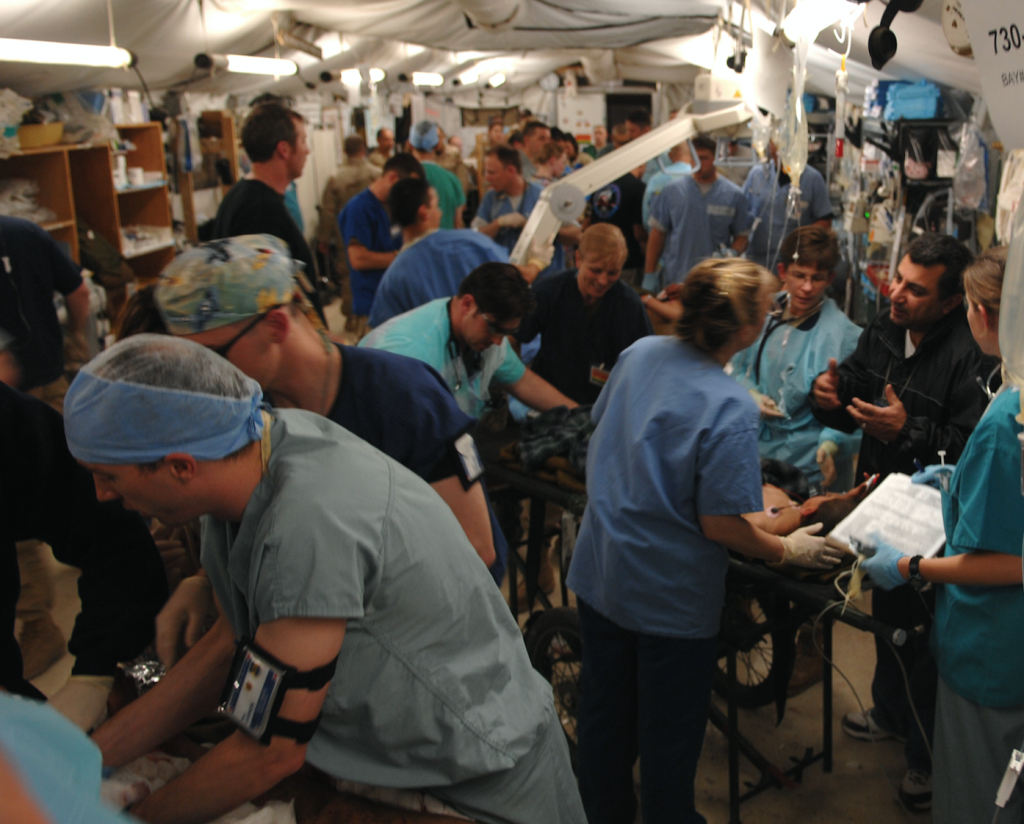
Included below is a summary of numerous blog posts and podcasts that discuss the sometimes controversial issue of permissive hypotension or minimum volume resuscitation in the bleeding trauma patient.
Disclaimer: These are highlights as interpreted by the author of this article and should not replace listening to the original podcast or reviewing the background research. Posts are in chronological order and many of the below podcasts go beyond the scope of permissive hypotension. […]
A #FOAMed Roadmap to Permissive Hypotension Read More »

Does End Tidal CO2 correlate with PaCO2 in Traumatic Brain Injury?
Your neurosurgeons and trauma team have accepted a transfer to your hospital for intensive management of a trauma patient who presented to a small community hospital with a traumatic subarachnoid hemorrhage and epidural hematoma after being involved in a motorcycle accident.
Upon arrival with the critical care transport team, the patient is already intubated and stable on a a ventilator with appropriate sedation and stable hemodynamics. However, the neurosurgeons are in the operating room managing a spontaneous intraparenchymal hemorrhage and there are no available ICU beds due to multiple gun shot victims from a gang fight that you finished admitting.
While the patient is in the ED, the neurosurgeons recommend maintaining eucapnea for the patient since while there are no acute signs of herniation.(1)
Can you use the end tidal CO2(etCO2) or do you need to rely on arterial blood gas (ABG) measurements to maintain PaCO2 between 35-40 mm Hg? […]
End Tidal CO2 in TBI Read More »

Concussion is a type of mild traumatic brain injury (TBI) that classically occurs in sports-related incidents but can be due to any traumatic force to the brain. The term concussion stems from the Latin word, concussus, which means “to shake violently.” While sport is the most common cause of concussion in children, the most common causes of concussion in adults are falls and motor vehicle accidents. Young children have the highest rate of concussions in all age groups. […]