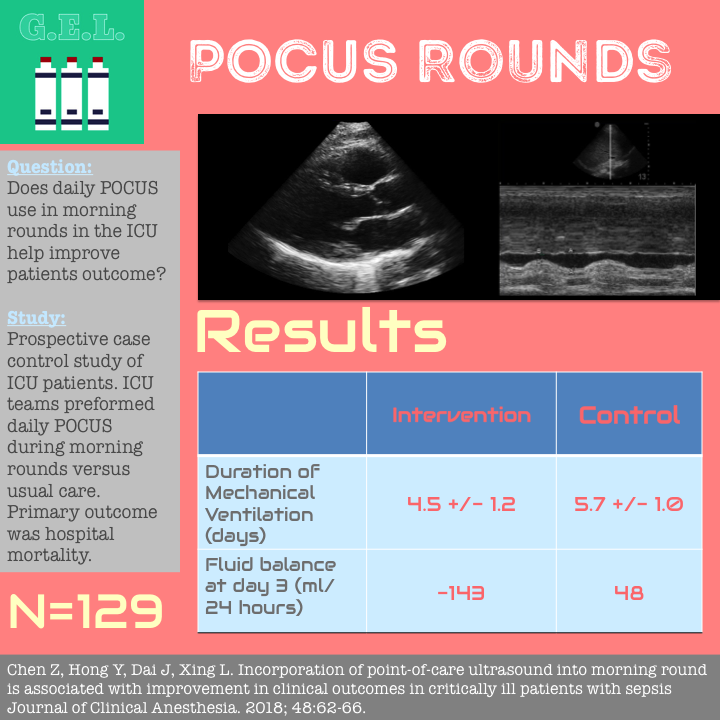
Ultrasound G.E.L. – POCUS Rounds in the ICU
Does routine use of US during morning rounds on all patients improve patient outcomes?
Ultrasound G.E.L. – POCUS Rounds in the ICU Read More »

Does routine use of US during morning rounds on all patients improve patient outcomes?
Ultrasound G.E.L. – POCUS Rounds in the ICU Read More »
A 65-year-old male with poorly controlled type 2 diabetes and ESRD on dialysis presents for right sided nose/facial discomfort and swelling and fever. Exam reveals altered mental status. He has right nasal swelling and tenderness, with a necrotic area on nasal septum. He is tachycardic, but the CV, pulmonary, skin, and GI systems are otherwise normal. What’s the likely diagnosis?
EM@3AM: Mucormycosis Read More »

Historically we’ve equated lactate with sepsis, but what else can cause an elevated lactate? When it comes down to it, lactate is only a number. This post investigates the ins and outs of this laboratory marker.
Normal Lactate, but a Sick Patient… Lactate is Not Everything Read More »

How do you define shock? What are the different types? This video and post from Anna Pickens provide key pearls.
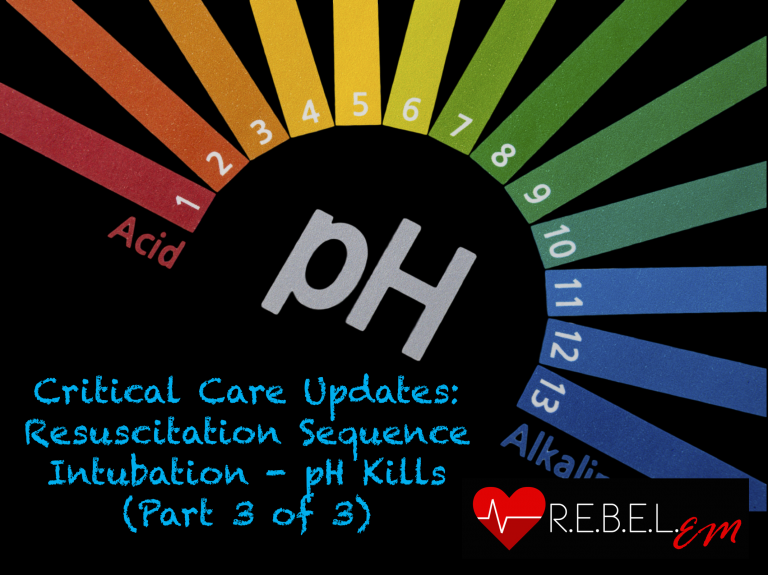
In part three of this series we will discuss some useful strategies at the bedside to help us not worsen pre-intubation/peri-intubation metabolic acidosis.

The skill with which you manage your patient with ICH in those first few hours could be the most important determinant of their outcome. In this Golden Hour you have a chance to prevent hematoma expansion, stabilize intracerebral perfusion and give your patient the best chance of survival with neurologic recovery.
EM Cases: Emergency Management of Intracerebral Hemorrhage – The Golden Hour Read More »
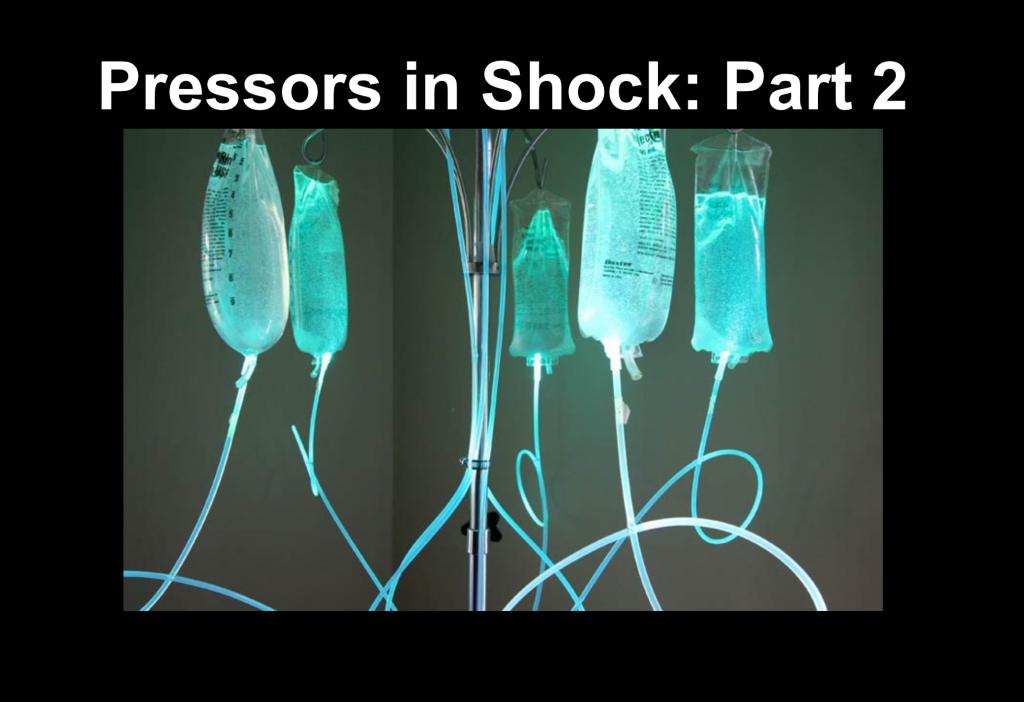
Welcome back to Part II of the series on vasopressors. Part I discussed basic guidelines for pressor use, in addition to specific literature regarding “inopressors” (norepinephrine, epinephrine, and dobutamine). Part II will discuss “pure inotropes” (dobutamine and milrinone) and “pure vasopressors” (vasopressin and phenylephrine).
An Evidence-Based Approach to Pressors in Shock: Part II Read More »

From EGDT to PROCESS/ARISE/PROMISE to Surviving Sepsis Guidelines, we have seen a shift in how fluid resuscitation is monitored, but the idea of aggressive fluid resuscitation is still the crux of our hemodynamic management of these patients.

Learn the nuances and importance of thiamine in your patient that presents to the ED. This in-depth article dives into the latest literature out on thiamine and how it relates to your patient in the ED.
Thiamine Deficiency: Pearls and Pitfalls Read More »

Well appearing patients who present to the emergency department (ED) rarely have serious disease. However, there are some conditions that can cause otherwise healthy patients to rapidly deteriorate. This article reviews a few conditions that can affect otherwise healthy patients and how to diagnose and treat these patients in the ED.
Healthy Patients with Potential to Crash Read More »