Elemental EM: Pediatric Intubation
This week’s Elemental EM discusses how to get more mental pediatric intubation practice.
Elemental EM: Pediatric Intubation Read More »

This week’s Elemental EM discusses how to get more mental pediatric intubation practice.
Elemental EM: Pediatric Intubation Read More »

GBS is a commonly missed diagnosis in the ED which has the potential to progress to significant morbidity – learn to recognize it early on in the ED presentation!
Guillain-Barré Syndrome – Third time’s the charm Read More »

The critically ill patient with neurologic trauma can present significant challenges for ED resuscitation. This post discusses key pearls and pitfalls in the evaluation and management of these patients.
Neurotrauma Resuscitation: Pearls & Pitfalls Read More »
Intubation is an important intervention in the ED. We see a critical or impending airway problem and we secure the airway with intubation–very satisfying! Yet our job does not stop there. In addition to maintaining an appropriate ventilation strategy after intubation, it is crucial that we use appropriate post-intubation sedation and analgesia regimens for the continued care of these critical patients. This post will review sedation and analgesia regimens for different clinical scenarios after intubation, as well as some common pitfalls that we must be diligent to avoid.
Post-intubation analgesia/sedation regimens in ED: Pearls & Pitfalls Read More »
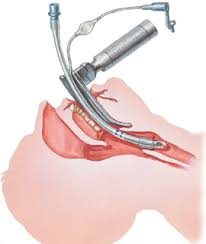
Intubation, especially in the septic and critically ill patient, can, by itself, cause hemodynamic abnormalities and/or hypoxemia and hypercapnea. In some situations, it may be important to make sure that the patient is adequately prepared for intubation, both from hemodynamic and pre-oxygenation standpoints. This is a brief review of some suggestions when intubating the very ill patient in the emergency department.
Unstable Sepsis: Airway First? Not Always Read More »

Airway management is a vital component to caring for critically-ill patients in the emergency department. The peri-intubation time can be chaotic. Planning for the difficult airway and preparing for all possible scenarios is best done before the arrival of a crashing patient. The following post explores some common failures in airway management and how to avoid making fatal mistakes in a critical situation.
The Difficult Airway: Common Errors During Intubation Read More »

We are masters of the airway, often managing life-threatening scenarios and conditions. However, the patient who decompensates around the time of intubation, or directly after the procedure, can be frightening. What can you do to mimize these events?
Post-Intubation Complications in ED Setting Read More »

A frightening airway: the critical GI bleeder. What can you do to maximize success?
Intubating the Gastrointestinal Bleeder Read More »
As the obesity epidemic continues to rise, we must be equipped to deal with the challenges that these patients bring to the emergency department. Dr. Mallemat discusses the pearls & pitfalls of the obese patient in EM, as well as some useful tips & tricks.
EM Care of the Obese Patient: Pearls & Pitfalls Read More »
You are working a busy shift when you receive a phone call from EMS that they are bringing in a “sick trauma patient.” As you prepare the trauma bay, the patient arrives. He is the victim of an assault and in clear need of intubation. He is unconscious with a GCS of 5, HR 125, BP 180/11, Sp02 88% on NRB 15 lpm, RR 22. As you prepare your medications, what are the best options for this scenario? Pre-treatment with lidocaine, fentantyl or esmolol? Is it okay to use ketamine in trauma patients in traumatic brain injury (TBI)?
Neuro Intubation Highlights Read More »