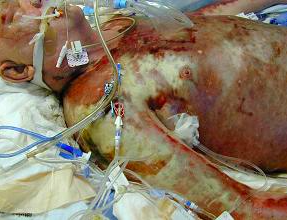
Modern-Day Burn Resuscitation: Moving Beyond the Parkland Formula
The burn patient: a review of the ins and outs of ED management.
Modern-Day Burn Resuscitation: Moving Beyond the Parkland Formula Read More »
The burn patient: a review of the ins and outs of ED management.
Modern-Day Burn Resuscitation: Moving Beyond the Parkland Formula Read More »
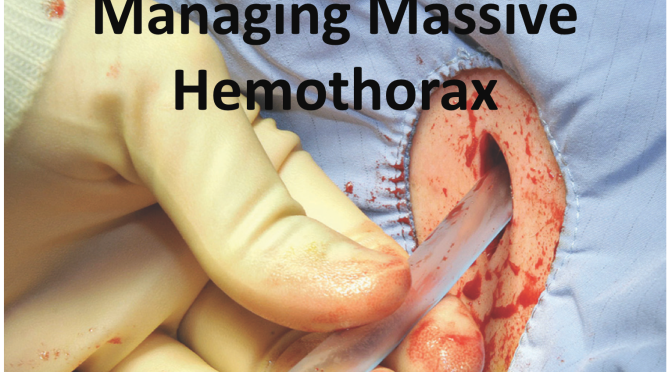
A hemothorax most commonly occurs secondary to penetrating or blunt chest wall trauma, with up to 70-80% of hemothoraces due to motor vehicle collisions. These injuries can cause rapid decompensation, but diagnosis and management isn’t always easy. This post is filled with pearls and pitfalls in diagnosis and management of massive hemothorax.
Managing a Massive Hemothorax: A Guide to Stabilizing Your Patient Read More »
The patient with GSW can present in a variety of states ranging from hemodynamic stability to loss of pulses. Several literature updates have evaluated specific components of the care of these patients including airway, breathing, hemorrhage control, thoracotomy, and REBOA. This post evaluates the updated literature and provides pearls and pitfalls in the care of these potentially sick patients.
Pearls for the management of GSW associated traumatic injury Read More »
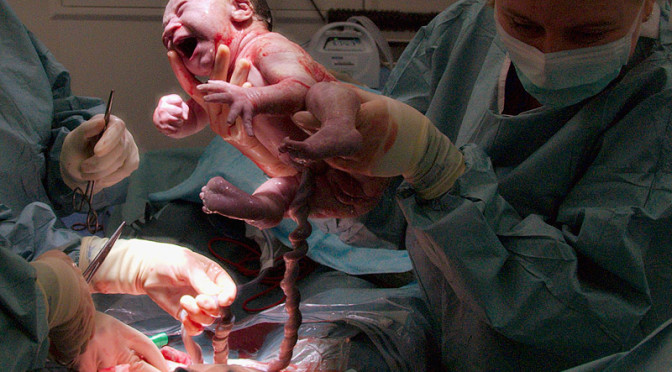
A cesarean section preformed either during maternal cardiac arrest or during impending maternal cardiac arrest the primary goal of which is to increase the chance of successfully resuscitating the mother and, potentially, improving fetal survival.
CORE EM: Peri-Mortem C-Section Read More »
The elderly trauma patient: what should we be looking for and how can we improve? Read on for important pearls and pitfalls.
Geriatric Trauma and Medical Illness: Pearls and Pitfalls Read More »
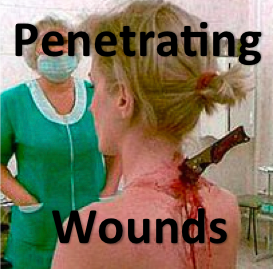
The patient with penetrating trauma can present with many different injuries. The majority of injuries are easily diagnosed. What about the patient with pneumothorax, diaphragmatic injury, ureteral injury, and hollow viscus injury? These are not so easy to diagnose, and delay in management can cause significant morbidity and mortality. This post provides pearls and pitfalls for these conditions.
Penetrating Trauma: What We Miss and How We Can Improve Read More »
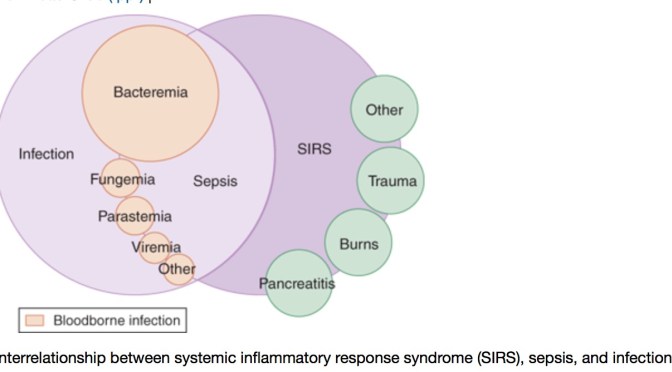
Trauma patients require systematic resuscitation and definitive treatment. However, there are sometimes underlying reasons for the injury, such as syncope prior to the injury or even an underlying infection that made him or her prone to injury. Not all trauma patients will be unstable from their injury and they may have underlying comorbidities that need to be uncovered and treated. This article reviews some basic steps that can be taken to evaluate for underlying infection in trauma patients.
Occult Sepsis in Traumatic Injuries Read More »
How do we manage his hemodynamics and when do we perform massive transfusion?
Traumatized children need your full attention.
Protocols work well for adults, but trauma in children requires that we exercise our clinical muscles just a bit more.
How do you care for the crashing trauma patient? This post takes you through the critical resuscitation step-by-step.
The Crashing Trauma Patient Read More »