Today on the emDOCs cast with Brit Long (@long_brit), we’re back with part 2 on post bariatric surgery complications, with a focus on the major complications. Please see Part 1 for some background and a general approach.
Episode 145: Post Bariatric Surgery Complications Part 2
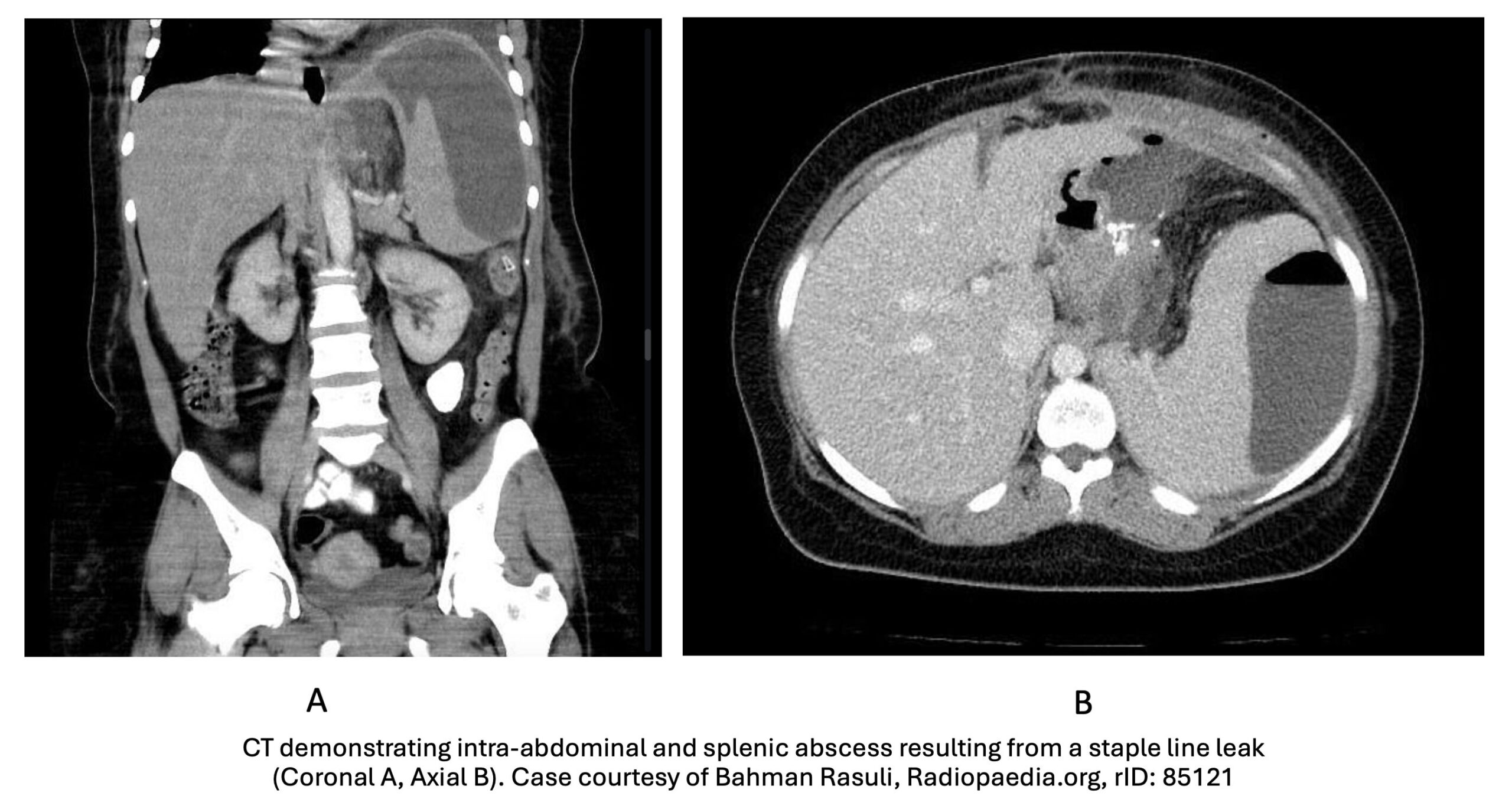
Anastomotic/staple line leak:
- Common surgical complications and a leading cause of death in these patients in the early postoperative period. Usually presents in the first week of surgery in patents who underwent RNYGB or sleeve gastrectomy.
- Five potential sites for an anastomotic leak in patients who have undergone RNYGB: the gastrojejunostomy, gastric pouch staple line, gastric remnant staple line, roux limb staple line, and jejunojejunostomy.
- Range of symptoms: asymptomatic (50%), but may be critically ill with fever, abdominal pain, tachycardia, peritonitis, and septic shock. Tenderness may not be present.
- Literature suggests tachycardia, fever, and leukocytosis are the most reliable findings.
- Imaging: CT chest, abdomen, pelvis with IV and oral contrast to evaluate for PE and leak; sensitivity depends on several different factors. Highly sensitive in bariatric centers, but sensitivity is less than 70% in other settings.
- Management: resuscitation, antibiotics, and surgical consultation. If unstable, OR necessary. In other patients who are stable, other options include percutaneous drain and endoscopic stent placement.
Small bowel obstruction/internal hernia:
- Bowel obstruction common; associated with worse outcomes in patients with bariatric surgery, especially internal hernia.
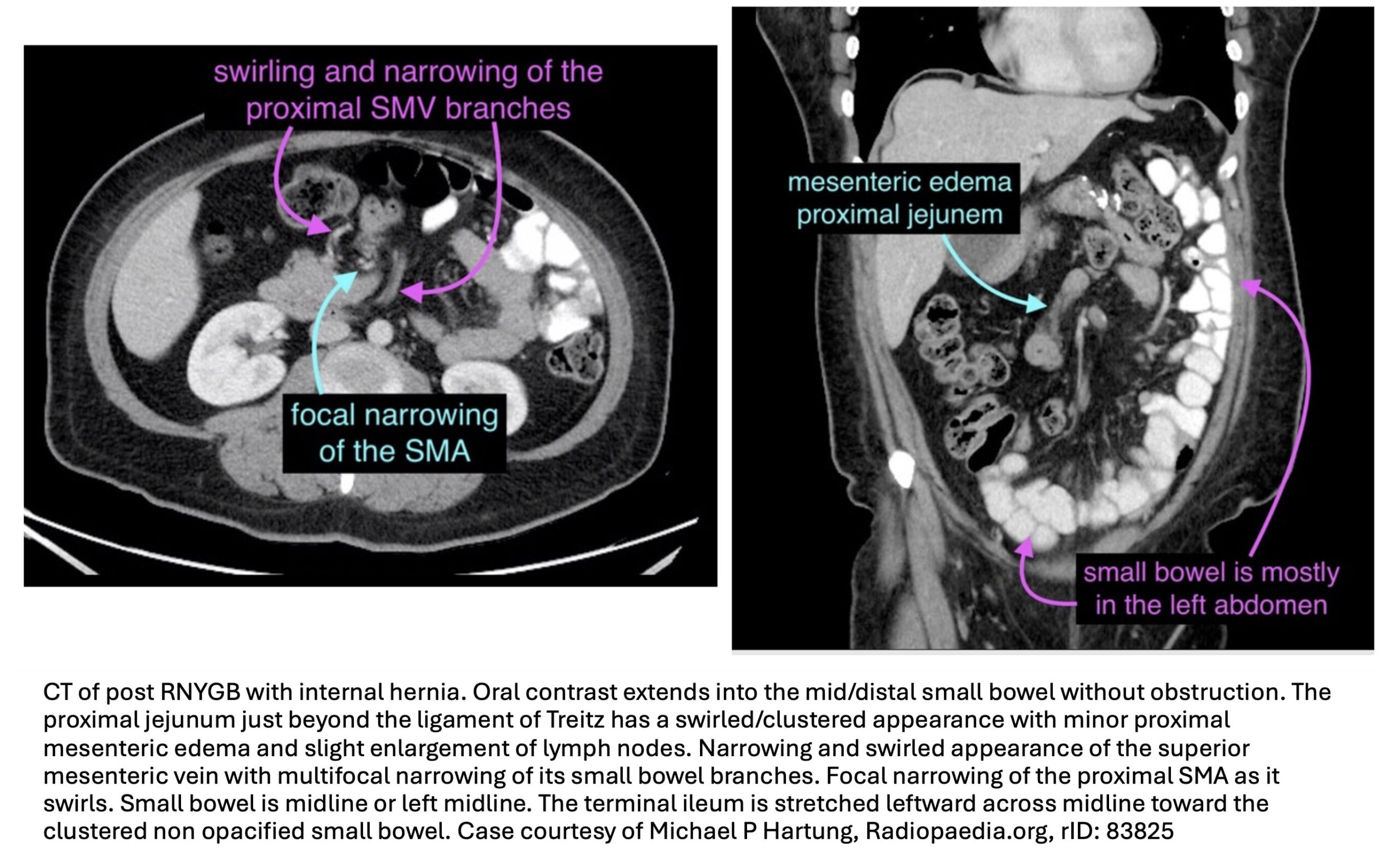
- Internal hernia: protrusion of bowel, most commonly the small bowel, through a normal or abnormal peritoneal or mesenteric aperture within the abdominal or pelvic cavity. May lead to a closed-loop bowel obstruction, which can result in strangulation and perforation.
- Incidence of internal hernia after laparoscopic RNYGB 3-16%.
- Occur any time after surgery; patients at the highest risk are those who have had more significant weight loss at least 1-3 years out from their surgery.
- Small bowel obstruction resulting from internal hernia is more common with laparoscopic compared to open gastric bypass; may be due to fewer intraabdominal adhesions with a laparoscopic approach.
- Most common clinical symptom is intermittent, postprandial abdominal pain (up to 90%); nausea and vomiting occurs in 65%. Less than 50% present with diffuse abdominal tenderness; 20% have no tenderness.
- Internal hernias can self-reduce; they may not be present when imaging obtained.
- First line imaging test is CT abdomen/pelvis with IV and PO contrast.
- No imaging study can reliably exclude internal hernia; false negative studies are common.
- Accuracy for upper GI series 25-100%; CT 33-100%.
- CT findings: crowding/engorgement of mesenteric vessels and twisting of the mesenteric vessels and bowel (whirl sign), clustered loops of bowel in the left upper quadrant, small bowel loop lying behind the superior mesenteric artery, or the presence of the jejunojejunal anastomosis to the right of midline (should be on the left typically).
- No sign highly sensitive or specific; up to 30% of patients with confirmed internal hernia in the OR have normal imaging. Consult the bariatric surgeon.
- Less common causes of bowel obstruction: intussusception and stricture.
- Any postoperative small bowel obstruction is concerning for internal hernia; requires emergent surgical evaluation for operative intervention. Herniated bowel can rapidly progress to ischemia and necrosis if not promptly reduced; NG tube will not decompress the blind pouch limb and gastric remnant in gastric bypass patients.
- Early-occurring small bowel obstruction after laparoscopic gastric bypass rarely due to adhesions; more commonly due to technical error with narrowing or kinking of the jejunojejunal anastomosis, intraluminal obstruction from hematoma, or port-site hernia. Need surgical correction.

Marginal ulcers:
- Late complication of RNYGB; defined as ulcers that occur at or in close contact with the gastrojejunal anastomosis.
- Most marginal ulcers develop 6-12 months after surgery; may be diagnosed as early as one month or as late as 20 years post-operatively.
- Likely due to exposure of jejunal tissue to highly acidic gastric contents; worsened with Helicobacter pyloriinfection or smoking, alcohol consumption, and nonsteroidal anti-inflammatory drug use.
- May be asymptomatic, but often result in abdominal or epigastric pain (60%), nausea and vomiting (up to 60%), dysphagia (< 40%), or bleeding. Most common presenting symptom in patients with perforated marginal ulcer is abdominal pain; < 50% with perforation have fever, tachycardia, peritonitis.
- Consult bariatric surgeon; may require scope/admission.
- Perforation: OR, broad-spectrum antibiotics, resuscitation.
Biliary disease:
- Rapid weight loss following bariatric surgery is an independent risk factor for gallstones.
- 30-53% develop gallstones within 12-18 months of surgery. Up to 14% present with biliary colic or cholecystitis; 10% develop choledocholithiasis.
- Present similar to other patients with biliary disease with RUQ pain.
- US miss up to 36% of gallstones in post bariatric patients; other imaging like endoscopic US and CT may be needed.
- In post RNYGB and BPD-DS patients, conventional ERCP cannot reach duodenum.
- Need an alternative endoscopic approach, combined endoscopic and surgical methods, percutaneous transhepatic access to the biliary tree, or cholecystectomy with bile duct exploration.
- Consult bariatric surgeon.
Gastric balloon and LAGB complications:
- Presenting symptoms of pouch enlargement: lack of satiety, heartburn, feelings of regurgitation, and chest pain.
- Signs and symptoms of band slippage and intragastric balloon intolerance: dysphagia, vomiting, inability to tolerate oral intake, and dehydration.
- 23-72% of the patients with gastric balloons have nausea; 20-50% abdominal pain.
- Most patients with band erosion are asymptomatic. If symptoms occur, may include loss of restriction, nonspecific epigastric pain, or GI bleeding.
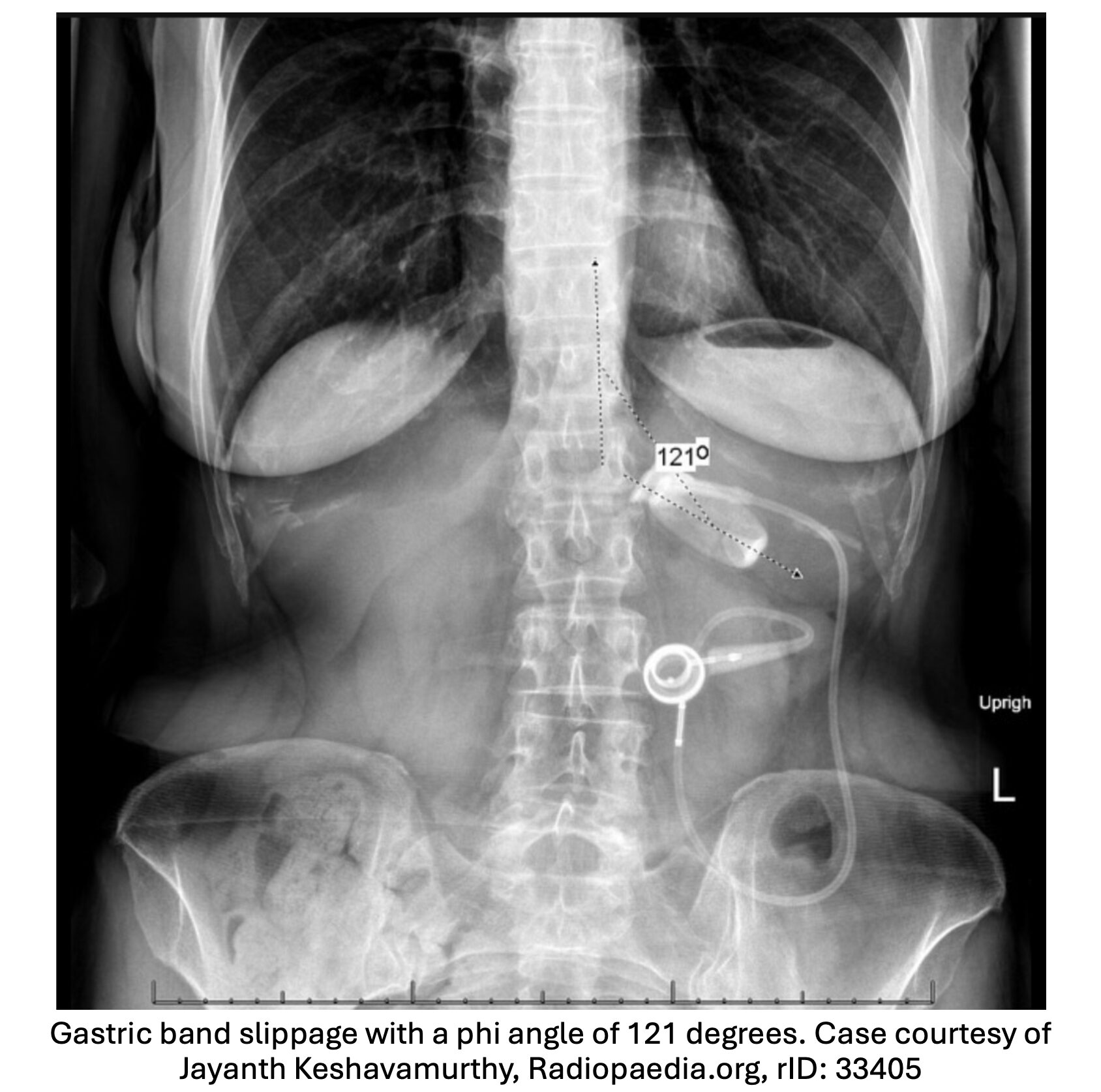
- Upright KUB helpful to evaluate for a slipped adjustable gastric band by determining phi angle (angle between a vertical line through the spine and another line along the long axis of the lap band). Normal phi angle between 4-58 degrees. Angle outside this range suggests slippage. ‘O’ sign on AP view represents the gastric band visible end on; strongly suggestive of posterior band slippage.
- CT is the test of choice though if concern for a more deadly complication.
Dumping syndrome:
- Rapid gastric emptying and entry of a food bolus into the small intestine; causes symptoms like abdominal pain, bloating, nausea, diarrhea, fatigue, flushing, palpitations, sweating, tachycardia, hypotension, syncope, hypoglycemia.
- Occurs in up to 40% of those with LSG or RNYGB.
- Typically managed with dietary modification alone (limiting intake of simple carbohydrates). Patients with severe diarrhea and hypotension may need IV fluids.
Summary:
- Bariatric surgeries include restrictive procedures like adjustable gastric banding, endoscopic gastric balloon insertion, and sleeve gastrectomy and mixed restrictive and malabsorptive procedures. These include RNYGB and BPD-DS.
- There are several complications associated with severe morbidity and mortality in the post-bariatric patient, including (1) anastomotic/staple line leaks, (2) small bowel obstruction and internal hernia, (3) marginal ulceration, (4) biliary disease, and (5) device-related complications.
- History is important. What was performed, when was it performed, who performed it, and have they had prior complications.
- Clinical signs of intra-abdominal complications are often absent or nonspecific, and symptoms can be intermittent. Patients with post-bariatric anastomotic leaks often won’t have tenderness with palpation or peritonitis.
- Tachycardia and tachypnea can be the initial signs of significant intra-abdominal complications in postoperative bariatric patients like anastomotic leak and also PE. Persistent vomiting in the post bariatric patient is concerning for an acute surgical emergency, especially an obstruction with internal hernia.
- When these patients come to the ED, consult the bariatric surgeon early. This can help guide imaging and management.
- If an anastomotic leak or internal hernia is suspected, CT of the abdomen/pelvis with PO and IV contrast is recommended. If they present in the early postoperative phase, add a CT of the chest to look for PE as well.
- Initial management in the ED for patients with anastomotic leaks is similar to those for intestinal perforation. The unstable patient with signs of uncontained leak needs the OR, resuscitation, and broad-spectrum antibiotics.
- Managing small bowel obstructions in the bariatric patient population differs from other patient populations. In the gastric bypass patient, any postoperative SBO should undergo emergent surgery specialist consultation due to the risk of internal hernia.
References:
- World Health Organization. “Obesity and Overweight.” https://www.who.int/en/news-room/fact-sheets/detail/obesity-and-overweight. Accessed July 2023.
- Ruban A, Stoenchev K, Ashrafian H, Teare J. Current treatments for obesity. Clin Med (Lond). 2019 May;19(3):205-212.
- Ogden CL, Fryar CD, Martin CB, Freedman DS, Carroll MD, Gu Q, Hales CM. Trends in Obesity Prevalence by Race and Hispanic Origin-1999-2000 to 2017-2018. JAMA. 2020 Sep 22;324(12):1208-1210.
- O’Brien PE. Bariatric surgery: mechanisms, indications and outcomes. J Gastroenterol Hepatol. 2010 Aug;25(8):1358-65.
- Sjöström L, Narbro K, Sjöström CD, Karason K, Larsson B, Wedel H, Lystig T, Sullivan M, Bouchard C, Carlsson B, Bengtsson C, Dahlgren S, Gummesson A, Jacobson P, Karlsson J, Lindroos AK, Lönroth H, Näslund I, Olbers T, Stenlöf K, Torgerson J, Agren G, Carlsson LM; Swedish Obese Subjects Study. Effects of bariatric surgery on mortality in Swedish obese subjects. N Engl J Med. 2007 Aug 23;357(8):741-52.
- Hoyuela C. Five-year outcomes of laparoscopic sleeve gastrectomy as a primary procedure for morbid obesity: a prospective study. World J Gastrointest Surg 2017; 9: 109-17.
- Buchwald H, Avidor Y, Braunwald E, et al. Bariatric Surgery: A Systematic Review and Meta-analysis. 2004;292(14):1724–1737.
- Martinou E, Stefanova I, Iosif E, Angelidi AM. Neurohormonal Changes in the Gut-Brain Axis and Underlying Neuroendocrine Mechanisms following Bariatric Surgery. Int J Mol Sci. 2022 Mar 19;23(6):3339.
- Contival N, Menahem B, Gautier T, Le Roux Y, Alves A. Guiding the non-bariatric surgeon through complications of bariatric surgery. J Visc Surg. 2018 Feb;155(1):27-40.
- Clapp B, Ponce J, DeMaria E, Ghanem O, Hutter M, Kothari S, LaMasters T, Kurian M, English W. American Society for Metabolic and Bariatric Surgery 2020 estimate of metabolic and bariatric procedures performed in the United States. Surg Obes Relat Dis. 2022 Sep;18(9):1134-1140.
- Alalwan AA, Friedman J, Park H, Segal R, Brumback BA, Hartzema AG. US national trends in bariatric surgery: A decade of study. Surgery. 2021 Jul;170(1):13-17.
- Altieri MS, Wright B, Peredo A, Pryor AD. Common weight loss procedures and their complications. Am J Emerg Med. 2018 Mar;36(3):475-479.
- Buchwald H, Estok R, Fahrbach K, Banel D, Sledge I. Trends in mortality in bariatric surgery: a systematic review and meta-analysis. Surgery. 2007 Oct;142(4):621-32; discussion 632-5.
- Kassir R, Debs T, Blanc P, Gugenheim J, Ben Amor I, Boutet C, Tiffet O. Complications of bariatric surgery: Presentation and emergency management. Int J Surg. 2016 Mar;27:77-81.
- Woźniewska P, Diemieszczyk I, Hady HR. Complications associated with laparoscopic sleeve gastrectomy – a review. Prz Gastroenterol. 2021;16(1):5-9.
- Samuels JM, Helmkamp L, Carmichael H, Rothchild K, Schoen J. Determining the incidence of postbariatric surgery emergency department utilization: an analysis of a statewide insurance database. Surg Obes Relat Dis. 2021 Aug;17(8):1465-1472.
- Singhal R, Cardoso VR, Wiggins T, Super J, Ludwig C, Gkoutos GV, Mahawar K; GENEVA Collaborators. 30-day morbidity and mortality of sleeve gastrectomy, Roux-en-Y gastric bypass and one anastomosis gastric bypass: a propensity score-matched analysis of the GENEVA data. Int J Obes (Lond). 2022 Apr;46(4):750-757.
- van Beek AP, Emous M, Laville M, Tack J. Dumping syndrome after esophageal, gastric or bariatric surgery: pathophysiology, diagnosis, and management. Obes Rev. 2017 Jan;18(1):68-85.
- Mason EE, Renquist KE, Huang YH, Jamal M, Samuel I. Causes of 30-day bariatric surgery mortality: with emphasis on bypass obstruction. Obes Surg. 2007 Jan;17(1):9-14.
- Morino M, Toppino M, Forestieri P, Angrisani L, Allaix ME, Scopinaro N. Mortality after bariatric surgery: analysis of 13,871 morbidly obese patients from a national registry. Ann Surg. 2007 Dec;246(6):1002-7; discussion 1007-9.
- American Society for Metabolic and Bariatric Surgery. “Estimate of Bariatric Surgery Numbers, 2011-2022.” https://asmbs.org/resources/estimate-of-bariatric-surgery-numbers/. Accessed July 2023.
- Ma IT, Madura JA 2nd. Gastrointestinal Complications After Bariatric Surgery. Gastroenterol Hepatol (N Y). 2015 Aug;11(8):526-35.
- Abou Rached A, Basile M, El Masri H. Gastric leaks post sleeve gastrectomy: review of its prevention and management. World J Gastroenterol 2014; 20: 13904-10.
- Shikora SA, Kim JJ, Tarnoff ME, Raskin E, Shore R. Laparoscopic Roux-en-Y Gastric Bypass: Results and Learning Curve of a High-Volume Academic Program. Arch Surg. 2005;140(4):362–367.
- Rausa E, Bonavina L, Asti E, Gaeta M, Ricci C. Rate of Death and Complications in Laparoscopic and Open Roux-en-Y Gastric Bypass. A Meta-analysis and Meta-regression Analysis on 69,494 Patients. Obes Surg. 2016 Aug;26(8):1956-63.
- Al Harakeh AB. Complications of laparoscopic Roux-en-Y gastric bypass. Surg Clin North Am. 2011 Dec;91(6):1225-37, viii.
- Biertho L, Lebel S, Marceau S, Hould FS, Julien F, Biron S. Biliopancreatic Diversion with Duodenal Switch: Surgical Technique and Perioperative Care. Surg Clin North Am. 2016 Aug;96(4):815-26.
- Cheng V, Samakar K, Dobrowolsky AB, Nguyen JD, Abel SA, Pakula A, Bernard A, Martin MJ. Common postbariatric surgery emergencies for the acute care surgeon: What you need to know. J Trauma Acute Care Surg. 2023 Dec 1;95(6):817-831.
- Tate CM, Geliebter A. Intragastric Balloon Treatment for Obesity: Review of Recent Studies. Adv Ther. 2017 Aug;34(8):1859-1875.
- Silva LB, Neto MG. Intragastric balloon. Minim Invasive Ther Allied Technol. 2022 Apr;31(4):505-514.
- Chapman AE, Kiroff G, Game P, Foster B, O’Brien P, Ham J, Maddern GJ. Laparoscopic adjustable gastric banding in the treatment of obesity: a systematic literature review. Surgery. 2004 Mar;135(3):326-51.
- Snow JM, Severson PA. Complications of adjustable gastric banding. Surg Clin North Am. 2011 Dec;91(6):1249-64, ix.
- Eid I, Birch DW, Sharma AM, Sherman V, Karmali S. Complications associated with adjustable gastric banding for morbid obesity: a surgeon’s guides. Can J Surg. 2011 Feb;54(1):61-6.
- Froylich D, Corcelles R, Davis M, Boules M, Daigle CR, Schauer PR, Brethauer SA. Factors associated with length of stay in intensive care after bariatric surgery. Surg Obes Relat Dis. 2016 Aug;12(7):1391-1396.
- Sakran N, Goitein D, Raziel A, Keidar A, Beglaibter N, Grinbaum R, Matter I, Alfici R, Mahajna A, Waksman I, Shimonov M, Assalia A. Gastric leaks after sleeve gastrectomy: a multicenter experience with 2,834 patients. Surg Endosc. 2013 Jan;27(1):240-5.
- Benedix F, Benedix DD, Knoll C, et al. Are there risk factors that increase the rate of staple line leakage in patients undergoing primary sleeve gastrectomy for morbid obesity? Obes Surg 2014; 24: 1610-6.
- Lewis KD, Takenaka KY, Luber SD. Acute Abdominal Pain in the Bariatric Surgery Patient. Emerg Med Clin North Am. 2016 May;34(2):387-407.
- Ukleja A, Stone RL. Medical and gastroenterologic management of the post-bariatric surgery patient. J Clin Gastroenterol. 2004 Apr;38(4):312-21.
- Ballesta, C., Berindoague, R., Cabrera, M. et al. Management of Anastomotic Leaks After Laparoscopic Roux-en-Y Gastric Bypass. OBES SURG 18, 623–630 (2008).
- Akyildiz H, Artis T, Sozuer E, Akcan A, Kucuk C, Sensoy E, Karahan I. Internal hernia: complex diagnostic and therapeutic problem. Int J Surg. 2009 Aug;7(4):334-7.
- Garza E Jr, Kuhn J, Arnold D, Nicholson W, Reddy S, McCarty T. Internal hernias after laparoscopic Roux-en-Y gastric bypass. Am J Surg. 2004 Dec;188(6):796-800.
- Blachar A, Federle MP, Pealer KM, Ikramuddin S, Schauer P. Gastrointestinal complications of laparoscopic Roux-en-Y gastric bypass surgery: clinical and imaging findings. Radiology. 2002;223:625–32
- Higa KD, Ho T, Boone KB. Internal hernias after laparoscopic Roux-en-Y gastric bypass: incidence, treatment and prevention. Obes Surg. 2003 Jun;13(3):350-4.
- Obeid A, McNeal S, Breland M, Stahl R, Clements RH, Grams J. Internal hernia after laparoscopic Roux-en-Y gastric bypass. J Gastrointest Surg. 2014 Feb;18(2):250-5.
- Salame M, Jawhar N, Belluzzi A, Al-Kordi M, Storm AC, Abu Dayyeh BK, Ghanem OM. Marginal Ulcers after Roux-en-Y Gastric Bypass: Etiology, Diagnosis, and Management. J Clin Med. 2023 Jun 28;12(13):4336.
- Gumbs AA, Duffy AJ, Bell RL. Incidence and management of marginal ulceration after laparoscopic Roux-Y gastric bypass. Surg Obes Relat Dis. 2006 Jul-Aug;2(4):460-3.
- Palermo M, Acquafresca PA, Rogula T, Duza GE, Serra E. Late surgical complications after gastric by-pass: a literature review. Arq Bras Cir Dig. 2015 Apr-Jun;28(2):139-43.
- Martinino A, Bhandari M, Abouelazayem M, Abdellatif A, Koshy RM, Mahawar K. Perforated marginal ulcer after gastric bypass for obesity: a systematic review. Surg Obes Relat Dis. 2022 Sep;18(9):1168-1175.
- Somasekar K, Chan DSY, Sreekumar NS, Anwer S. Choledocholithiasis after Bariatric Surgery-More than a Stone’s Throw to Reach? J Gastrointest Surg. 2018 Mar;22(3):529-537.
- Andrés-Imaz A, Martí-Gelonch L, Eizaguirre-Letamendia E, Asensio-Gallego JI, Enríquez-Navascués JM. Incidence and risk factors for de novo cholelithiasis after bariatric surgery. Cir Esp (Engl Ed). 2021 Nov;99(9):648-654.
- Tustumi F, Pinheiro Filho JEL, Stolzemburg LCP, Serigiolle LC, Costa TN, Pajecki D, Santo MA, Nahas SC. Management of biliary stones in bariatric surgery. Ther Adv Gastrointest Endosc. 2022 Jun 19;15:26317745221105087.
- Niville E, Dams A, Vlasselaers J. Lap-Band erosion: incidence and treatment. Obes Surg. 2001 Dec;11(6):744-7.
- Francica G, Giardiello C, Iodice G, et al. Ultrasound as the imaging method of choice for monitoring the intragastric balloon in obese patients: normal findings, pitfalls and diagnosis of complications. Obes Surg. 2004;14(6):833–837.
- Montravers P, Augustin P, Zappella N, Dufour G, Arapis K, Chosidow D, Fournier P, Ribeiro-Parienti L, Marmuse JP, Desmard M. Diagnosis and management of the postoperative surgical and medical complications of bariatric surgery. Anaesth Crit Care Pain Med. 2015 Feb;34(1):45-52.
- Lim R, Beekley A, Johnson DC, Davis KA. Early and late complications of bariatric operation. Trauma Surg Acute Care Open. 2018 Oct 9;3(1):e000219.
- Pieroni S, Sommer EA, Hito R, Burch M, Tkacz JN. The “O” sign, a simple and helpful tool in the diagnosis of laparoscopic adjustable gastric band slippage. AJR Am J Roentgenol. 2010 Jul;195(1):137-41.
- Lehnert B, Moshiri M, Osman S, Khandelwal S, Elojeimy S, Bhargava P, Katz DS. Imaging of complications of common bariatric surgical procedures. Radiol Clin North Am. 2014 Sep;52(5):1071-86.
- Oudman E, Wijnia JW, van Dam M, Biter LU, Postma A. Preventing Wernicke Encephalopathy After Bariatric Surgery. Obes Surg. 2018 Jul;28(7):2060-2068.
- O’Kane M, Parretti HM, Pinkney J, Welbourn R, Hughes CA, Mok J, Walker N, Thomas D, Devin J, Coulman KD, Pinnock G, Batterham RL, Mahawar KK, Sharma M, Blakemore AI, McMillan I, Barth JH. British Obesity and Metabolic Surgery Society Guidelines on perioperative and postoperative biochemical monitoring and micronutrient replacement for patients undergoing bariatric surgery-2020 update. Obes Rev. 2020 Nov;21(11):e13087.
- Fry BT, Finks JF. Abdominal Pain After Roux-en-Y Gastric Bypass: A Review. JAMA Surg. 2023;158(10):1096–1102.
- Carucci LR, Turner MA, Conklin RC, DeMaria EJ, Kellum JM, Sugerman HJ. Roux-en-Y gastric bypass surgery for morbid obesity: evaluation of postoperative extraluminal leaks with upper gastrointestinal series. Radiology. 2006 Jan;238(1):119-27.
- Lanzetta MM, Masserelli A, Addeo G, Cozzi D, Maggialetti N, Danti G, Bartolini L, Pradella S, Giovagnoni A, Miele V. Internal hernias: a difficult diagnostic challenge. Review of CT signs and clinical findings. Acta Biomed. 2019 Apr 24;90(5-S):20-37.
- Carr WR, Mahawar KK, Balupuri S, Small PK. An evidence-based algorithm for the management of marginal ulcers following Roux-en-Y gastric bypass. Obes Surg. 2014 Sep;24(9):1520-7.
- Yorke E, Switzer NJ, Reso A, et al. Intragastric Balloon for Management of Severe Obesity: a Systematic Review. Obes Surg 2016;26:2248-54.
- Trang J, Lee SS, Miller A, et al. Incidence of nausea and vomiting after intragastric balloon placement in bariatric patients – A systematic review and meta-analysis. Int J Surg 2018;57:22-9.
- Zheng Y, Wang M, He S, et al. Short-term effects of intragastric balloon in association with conservative therapy on weight loss: a meta-analysis. J Transl Med 2015;13:246.
- Alabousi A, Patlas MN, Sne N, Katz DS. Is Oral Contrast Necessary for Multidetector Computed Tomography Imaging of Patients With Acute Abdominal Pain? Can Assoc Radiol J. 2015 Nov;66(4):318-22.
- Kessner R, Barnes S, Halpern P, Makrin V, Blachar A. CT for Acute Nontraumatic Abdominal Pain-Is Oral Contrast Really Required? Acad Radiol. 2017 Jul;24(7):840-845.
- De Simone B, Ansaloni L, Sartelli M, Kluger Y, Abu-Zidan FM, Biffl WL, Heyer A, Coccolini F, Baiocchi GL; OBA trial supporters; Catena F. The Operative management in Bariatric Acute abdomen (OBA) Survey: long-term complications of bariatric surgery and the emergency surgeon’s point of view. World J Emerg Surg. 2020 Jan 6;15(1):2.
- Carucci LR, Turner MA, Yu J. Imaging evaluation following Roux-en-Y gastric bypass surgery for morbid obesity. Radiol Clin North Am. 2007 Mar;45(2):247-60.
- Samji KB, Kielar AZ, Connolly M, Fasih N, Doherty G, Chung A, Hache E. Anastomotic Leaks After Small- and Large-Bowel Surgery: Diagnostic Performance of CT and the Importance of Intraluminal Contrast Administration. AJR Am J Roentgenol. 2018 Jun;210(6):1259-1265.
- Alharbi SR. Computed Tomography-based Diagnosis of Post-laparoscopic Sleeve Gastrectomy Gastric Leak. J Clin Imaging Sci. 2020 Mar 4;10:8.
- Kim TH, Kim JH, Shin CI, Kim SH, Han JK, Choi BI. CT findings suggesting anastomotic leak and predicting the recovery period following gastric surgery. Eur Radiol. 2015 Jul;25(7):1958-66.
- Bingham J, Shawhan R, Parker R, Wigboldy J, Sohn V. Computed tomography scan versus upper gastrointestinal fluoroscopy for diagnosis of staple line leak following bariatric surgery. Am J Surg. 2015 May;209(5):810-4; discussion 814.
- Levine MS, Carucci LR. Imaging of bariatric surgery: normal anatomy and postoperative complications. Radiology. 2014 Feb;270(2):327-41.
- Parakh S, Soto E, Merola S. Diagnosis and management of internal hernias after laparoscopic gastric bypass. Obes Surg. 2007 Nov;17(11):1498-502.
- Onopchenko A. Radiological diagnosis of internal hernia after Roux-en-Y gastric bypass. Obes Surg. 2005 May;15(5):606-11.
- Iannuccilli JD, Grand D, Murphy BL, Evangelista P, Roye GD, Mayo-Smith W. Sensitivity and specificity of eight CT signs in the preoperative diagnosis of internal mesenteric hernia following Roux-en-Y gastric bypass surgery. Clin Radiol. 2009 Apr;64(4):373-80.
- Petrucciani N, Ciangura C, Debs T, Ducarme G, Calabrese D, Gugenheim J; BARIA-MAT Study Group. Management of surgical complications of previous bariatric surgery in pregnant women. A systematic review from the BARIA-MAT Study Group. Surg Obes Relat Dis. 2020 Feb;16(2):312-331.
- Nusbaum J, Gupta N. Points & Pearls: Emergency department management of patients with complications of bariatric surgery. Emerg Med Pract. 2019 Jul 1;21(7):e1-e2.
- Alazmi W, Al-Sabah S, AlMohammad Ali D, Almazeedi S. Treating sleeve gastrectomy leak with endoscopic stenting: the Kuwaiti experience and review of recent literature. Surg Endosc. 2014;28(12):3425–3428.
- Okazaki O, Bernardo WM, Brunaldi VO, et al. Efficacy and safety of stents in the treatment of fistula after bariatric surgery: a systematic review and meta-analysis. Obes Surg. 2018;28(6):1788– 1796.
- Pequignot A, Fuks D, Verhaeghe P, et al. Is there a place for pigtail drains in the management of gastric leaks after laparoscopic sleeve gastrectomy? Obes Surg. 2012;22(5):712–720.
- Sportes A, Aireini G, Kamel R, et al. Efficacy of endoscopic treatment of post-sleeve gastrectomy fistulas according to the radiological type. Obes Surg. 2019;29(7):2217–2224.
- Giuliani A, Romano L, Marchese M, et al. Gastric leak after laparoscopic sleeve gastrectomy: management with endoscopic double pigtail drainage. A systematic review. Surg Obes Relat Dis. 2019;15(8):1414–1419.
- Hwang RF, Swartz DE, Felix EL. Causes of small bowel obstruction after laparoscopic gastric bypass. Surg Endosc. 2004 Nov;18(11):1631-5.
- Nelson LG, Gonzalez R, Haines K, Gallagher SF, Murr MM. Spectrum and treatment of small bowel obstruction after Roux-en-Y gastric bypass. Surg Obes Relat Dis. 2006 May-Jun;2(3):377-83, discussion 383.