Episode 152: Tumor Lysis Syndrome
Background:
- Tumor lysis syndrome (TLS) is a potentially deadly metabolic oncologic emergency.
- Most commonly occurs in malignancies with high proliferation and cell turnover.
- Associated with extensive tumor cell death with release of nucleic acids, uric acid, phosphate, potassium, cytokines, and interleukins.
- Leads to electrolyte abnormalities and toxin release; severe end organ dysfunction (neurologic, renal, cardiovascular systems).
Epidemiology:
- Rare diagnosis, but rates have increased in recent years.
- 2017 study found that from 2010 to 2013, the incidence of TLS among all hospitalized patients was 16 per 100,000 (Durani).
- One study found that between 2016 and 2019, the incidence of TLS more than doubled to 36 per 100,000 with a steady increase from 28.6 per 100,000 in 2016 to 44.3 in 2019 (Guimire).
- Most adult cases are in males, with mean age over 60 years.
- For pediatric hematologic cancers, overall incidence ranges from 4.4-53.6% (Cheng, Cairo, Pathak).
- Associated with severe morbidity and mortality.
- In-hospital mortality over 20%, with 69% of patients experiencing > 1 major complication during their hospital stay (Durani): acute renal failure, acute respiratory failure, sepsis, arrhythmias, GI bleeding, and cerebral hemorrhage.
- AKI occurs in 30-69% of patients; associated with a higher rate of in-hospital mortality and 6-month mortality.
- Arrhythmias in > 23% of patients; atrial fibrillation the most common followed by ventricular tachycardia in adults.
Diagnosis:
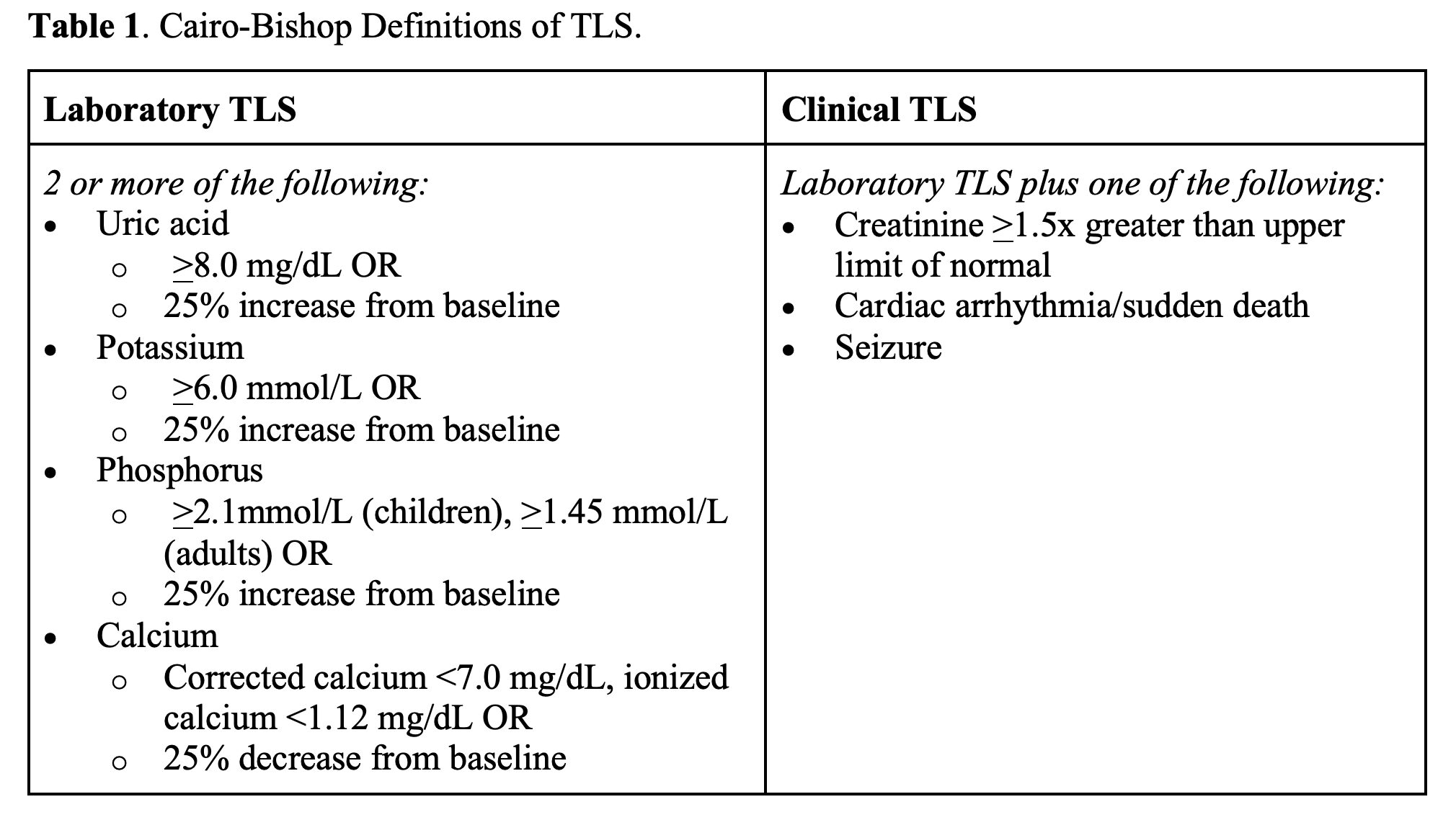
- Diagnostic criteria based on the Cairo-Bishop definition; includes laboratory and clinical criteria (Table 1).
- Laboratory TLS: > 2 laboratory abnormalities
- Clinical TLS: Laboratory TLS plus elevated creatinine, arrythmia, sudden death, seizure
Risk Factors:
- Based on underlying cancer type and several patient characteristics (8,9).
- Malignancies: non-Hodgkin lymphoma (30% of cases), solid tumors (20%), AML (19%), and ALL.
- Burkitt lymphoma susceptible to TLS due rapid cell turnover, significant tumor burden, and high sensitivity to chemotherapy
- Large tumor burden (white blood cell count >15,000/mm3, bulky disease >10cm, bone marrow involvement, splenomegaly/hepatomegaly) and renal infiltration or outflow obstruction increase the risk.
- Patient-related factors: hypovolemia, hypotension, pre-existing kidney disease, high uric acid/phosphate prior to treatment, elevated LDH.
- Treatment-related risks: chemotherapy intensity, combination therapy, and nephrotoxin use.
- Triggers: TLS most commonly occurs within 72 hours of cytotoxic chemotherapy.
- Other triggers: radiation, embolization, monoclonal antibody infusion, chimeric antigen receptor-T cell therapy, kinase inhibitors, proteasome inhibitors, thalidomide/lenalidomide, venetoclax, hydroxyurea.
- May occur spontaneously in aggressive tumors prior to treatment (extremely rare).
Presentation:
- Variety of ways patients can present based on the metabolic issues.
- AKI: oliguria/anuria, fatigue, dysuria, hematuria, flank pain.
- Hyperphosphatemia: lethargy, nausea, vomiting, diarrhea, seizures.
- Hypocalcemia: muscle cramps, tetany, paresthesias, renal injury, and seizures.
- Uremia: altered mental status, pruritus, hiccups, restless legs, changes in taste, bruising.
- Cardiopulmonary complications: dysrhythmias (hypocalcemia and hyperkalemia, syncope, heart failure, volume overload).
Differential Diagnosis:
- Hypovolemia due to decreased oral intake or gastrointestinal losses
- Sepsis/infections (bacterial, viral, fungal)
- Neurological complications of hematological malignancies (leptomeningeal metastases, spinal cord compression, paraneoplastic syndromes)
- Chemotherapeutic agent side effects
- Other cardiopulmonary issues: PE, CHF, myocarditis
Testing:
- ECG, CBC, electrolytes, renal/liver function, calcium, mag, phosphate, uric acid, LDH (elevated due to rapid cell turnover), and UA.
- Lactate, troponin, blood cultures, imaging based on clinical assessment and concern for other conditions.
Suspect TLS with:
- Patient undergoing chemotherapy + nonspecific signs/symptoms + labs findings (acute kidney injury, elevated uric acid, hyperphosphatemia, hyperkalemia, or hypocalcemia). If present, review Cairo-Bishop criteria.
Management:
- Primary goals: IV fluid resuscitation, catalysing uric acid oxidation, managing electrolyte abnormalities, excluding other dangerous conditions.
- Consult hematology/oncology and nephrology specialists if concerned; may require transfer to tertiary center.
- Fluid resuscitation: target euvolemia, then administer IV fluids at 150-200mL/hr for adults; target urine output of 80-100mL/hr. Kids less than 10 kg: 200ml/kg/day total fluids.
- Oncology often recommends normal saline; prior reviews recommended avoiding fluids with calcium, phosphate, and potassium (not based on high quality evidence).
- Catalyzing uric acid oxidation: Rasburicase oxidizes uric acid to allantoin.
- Rasburicase recommended in those with uric acid levels over 7.5 mg/dL.
- Typically lowers serum uric acid within 4 hours.
- 2026 multicenter propensity matched cohort study evaluated 1276 patients with severe TLS. Rasburicase within the first 12 hours: lower risk of acute kidney injury needing kidney replacement therapy or death. Patients with a serum bicarb < 20 and moderate to severe AKI benefitted most.
- Generally well tolerated; small risk of anaphylaxis.
- Contraindicated during pregnancy, during lactation, and G6PD deficiency.
- Literature suggests adult dosing can range between 3-6mg IV. Pediatric dosing is 1.5 mg or 0.15 mg/kg.
- Rasburicase recommended in those with uric acid levels over 7.5 mg/dL.
- Electrolyte issues:
- Hyperkalemia: insulin/glucose and albuterol for transcellular shift and fluids, oral potassium binders, and diuretics for excretion.
- IV calcium can potentially result in calcium phosphate precipitation. If patient has ECG changes concerning for hyperkalemia with prolonged PR or QRS interval, bradycardia, or sinusoidal wave pattern or symptomatic hypocalcemia, administer calcium gluconate.
- If unstable or ventricular arrhythmia, or severe neurologic symptoms, administer calcium.
- Administer furosemide in patients with low urinary output despite hydration or volume overload.
- Avoid thiazide diuretics; may increase serum uric acid levels.
- Hyperphosphatemia: IV fluid resuscitation: sevelamer (phosphate binding agent) can be used.
- Hemodialysis or continuous veno-venous hemofiltration may be necessary in those with oliguria or anuria; calcium phosphate level > 70mg2/dL2; symptomatic hypocalcemia unresponsive to supplementation; volume overload not responding to diuresis; symptomatic uremia; refractory acidosis; and refractory electrolyte issues (4,8).
- Peritoneal dialysis not recommended; less efficient in clearing uric acid, phosphate.
- Hyperkalemia: insulin/glucose and albuterol for transcellular shift and fluids, oral potassium binders, and diuretics for excretion.
Controversies:
- Urinary alkalinization and sodium bicarbonate previously recommended, but this worsens calcium phosphate precipitation and further decreases calcium.
- Allopurinol: competitive inhibitor of xanthine oxidase; may prevent the buildup of uric acid
- Medication does not clear existing uric acid and can increase the risk of xanthine nephropathy and stone formation.
- Not recommended if there is established TLS, unless there is a contraindication to rasburicase.
- Febuxostat is another xanthine oxidase inhibitor; similar efficacy to allopurinol. May be used in those allergic to allopurinol; no well-defined use in established TLS.
Summary:
- TLS is a metabolic oncologic emergency.
- Most commonly occurs in patients with acute leukemia and lymphoma undergoing chemotherapy.
- Diagnosis based on the Cairo-Bishop classification.
- Presents with variety of signs and symptoms. Complications include electrolyte abnormalities, AKI, arrhythmias, respiratory failure, cerebral or gastrointestinal hemorrhage, and neurological disturbances such as seizures.
- Consider in cancer patients undergoing therapy who present with vague symptoms and lab abnormalities.
- ED management: IV fluid resuscitation, treating electrolyte abnormalities, catalyzing uric acid oxidation, and excluding other life-threatening conditions. Consult oncology and renal specialists.
References:
- Namendys-Silva SA, Arredondo-Armenta JM, Plata-Menchaca EP, et al. Tumor lysis syndrome in the emergency department: challenges and solutions. Open Access Emerg Med. 2015;7:39-44.
- Cairo MS, Bishop M. Tumour lysis syndrome: new therapeutic strategies and classification. Br J Haematol. 2004;127:3-11.
- Howard SC, Jones DP, Pui CH. The Tumor Lysis Syndrome. N Engl J Med. 2011;364(19):1844-1854.
- Molyneux K, Beck-Esmay J, Koyfman A, Long B. High risk and low incidence diseases: Tumor lysis syndrome. Am J Emerg Med. 2025 Dec;98:283-288.
- Rahmani B, Patel S, Seyam O, et al. Current understanding of tumor lysis syndrome. Hematol Oncol. 2019;37:537-547.
- Howard SC, Avagyan A, Workeneh B, et al. Tumour lysis syndrome. Nat Rev Dis Primers. 2024;10:58
- Durani U, Shah ND, Go RS. In-Hospital Outcomes of Tumor Lysis Syndrome: A Population-Based Study Using the National Inpatient Sample. The Oncologist. 2017;22:1506-1509.
- Williams SM, Killeen AA. Tumor Lysis Syndrome. Arch Pathol Lab Med. 2019;143:386-393
- Criscuolo M, Fianchi L, Dragonetti G, et al. Tumor lysis syndrome: review of pathogenesis, risk factors, and management of a medical emergency. Expert Rev Hematol. 2016;9(2):197-208.
- Perissinotti AJ, Bishop MR, Bubalo J, et al. Expert consensus guidelines for the prophylaxis and management of tumor lysis syndrome in the United States: Results of a modified Delphi panel. Cancer Treat Rev. 2023;120:102603.
- Yu X, Liu L, Nie X, et al. The optimal single-dose regimen of rasburicase for management of tumour lysis syndrome in children and adults: a systematic review and meta-analysis. J Clin Pharm Ther. 2017;42(1):18-26.
- Durani U, Shah ND, Go RS. In-Hospital Outcomes of Tumor Lysis Syndrome: A Population-Based Study Using the National Inpatient Sample. The Oncologist. 2017;22:1506-1509.
- Ghimire C, Baral N, Mathew SM, et al. Outcomes of Tumor Lysis Syndrome in Hospitalized Patients: A Retrospective Cohort Study from National Inpatient Sample 2016-2019. Blood. 2022;140(1):11741.
- Cheung WL, Hon KL, Fung CM, et al. Tumor lysis syndrome in childhood malignancies. Drugs Context. 2020;9:2019-8-2.
- Cairo MS, Thompson S, Stern L. Incidence of treatment-related, laboratory and clinical tumor lysis syndrome. Blood. 2012;120(21):238.
- Pathak R, Giri S, Aryal M. Recent trends in the incidence and outcomes of tumor lysis syndrome in hematological malignancies: data from 2010-2014 national inpatient sample. Blood. 2017;130(suppl):3390.
- Shenoy T, Sanchez-Almanzar D, Dias JA, et al. Early treatment with rasburicase and risk of kidney replacement therapy and death in adults with tumour lysis syndrome: emulated target trial. BMJ. 2026 Jul 23;394:e100040.