
Visual Wednesdays: TIA
Visual Wednesdays brings you TIA.
Visual Wednesdays: TIA Read More »


Posterior circulation strokes are challenging… This post from Ava Pierce gives you pearls and pitfalls for the diagnosis of posterior circulation strokes.
Posterior Circulation Strokes: Why do we miss them, and how do we improve? Read More »
Clay brings you managing severe hypertension, guidelines on nonvariceal upper GI bleeding, and AHA stroke guideline updates.
Journal Feed Weekly Wrap-Up Read More »

There have been many studies evaluating endovascular therapy in the management of ischemic stroke published in the past few years. This post will serve as a review of those studies.
R.E.B.E.L. EM – Endovascular Therapy for Acute Ischemic Stroke Read More »
Which patients need what type of scanning? Where should that scanning be done – at the stroke center or at the peripheral center? Which patients should get systemic thrombolytics? Which patients should get endovascular therapy? In this EM Cases main episode podcast, a follow up to our episode on TIA released in November 2018 with Walter Himmel and David Dushenski, we try to simplify the confusing time-based and brain tissue-based options for stroke management…
EM Cases: ED Stroke Management in the Age of Endovascular Therapy Read More »
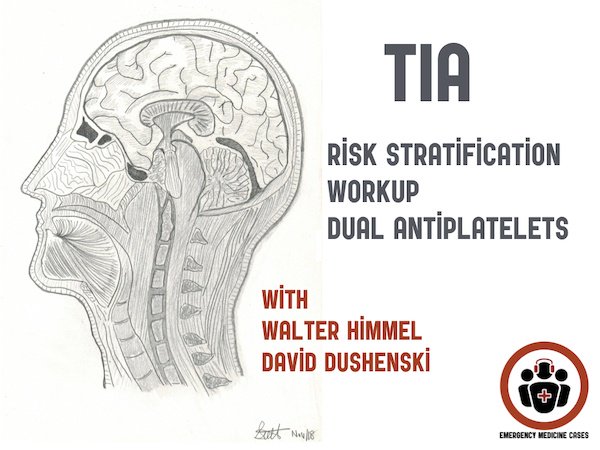
Much has changed in recent years when it comes to TIA risk stratification, workup and antiplatelet therapy. It’s time we paid more attention to TIA…
EM Cases: TIA Update – Risk Stratification, Workup and DAPT Read More »
A 65-year-old male presents with altered mental status and right sided weakness. Symptoms began approximately two hours earlier when the patient began to complain of a severe headache. He has become more confused and is now unable to walk normally. Vital Signs: BP 202/98, HR 89, RR 12, T 36.7, SpO2 98% RA. Exam reveals an uncomfortable gentleman who is able to state his name, but unable to give the correct date or his location. He has profound right sided weakness in both upper and lower extremities. What’s your next step?
EM@3AM: Spontaneous Intracerebral Hemorrhage Read More »

With all the new stroke literature, how can you keep track of everything? Fortunately, the AHA/ASA recently published the 2018 ischemic strokes guidelines. This post provides emergency medicine-focused highlights of the updated guidelines.
2018 AHA/ASA Ischemic Stroke Updates Read More »
A thunderclap headache is defined by sudden, severe pain. The classic teaching in medical school is that a “thunderclap” headache is pathognomonic for subarachnoid hemorrhage. However, only 11-25% of TCHs are due to SAH. What else should you consider when a patient presents with a TCH?
Thunderclap Headache – Pearls and Pitfalls Read More »
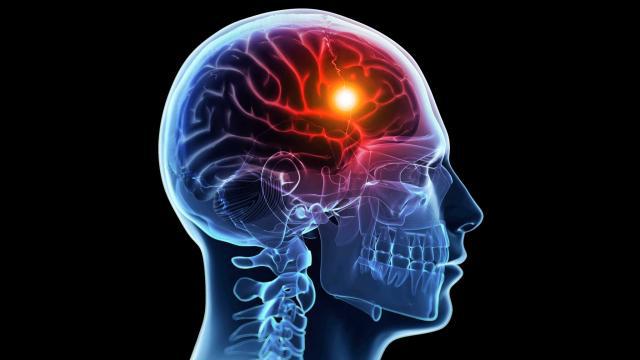
A stroke mimic is defined as a nonvascular disease that presents with stroke-like symptoms, often indistinguishable from an actual stroke. Why does it matter if a mimic is diagnosed as a stroke? Learn the pearls and pitfalls of stroke mimics.
Stroke Mimics: Pearls and Pitfalls Read More »